
Chemical-Resistant Coatings
Chemical-resistant floor coatings in Tema & Accra — vinyl-ester, novolac and chemical-grade epoxy systems tested to ASTM C267 for acid, alkali and solvent resistance, for processing plants, battery and plating rooms, bunded areas and secondary containment, on slabs moisture-tested to ASTM F2170/F1869. Industrial Floors Ghana, since 1975.
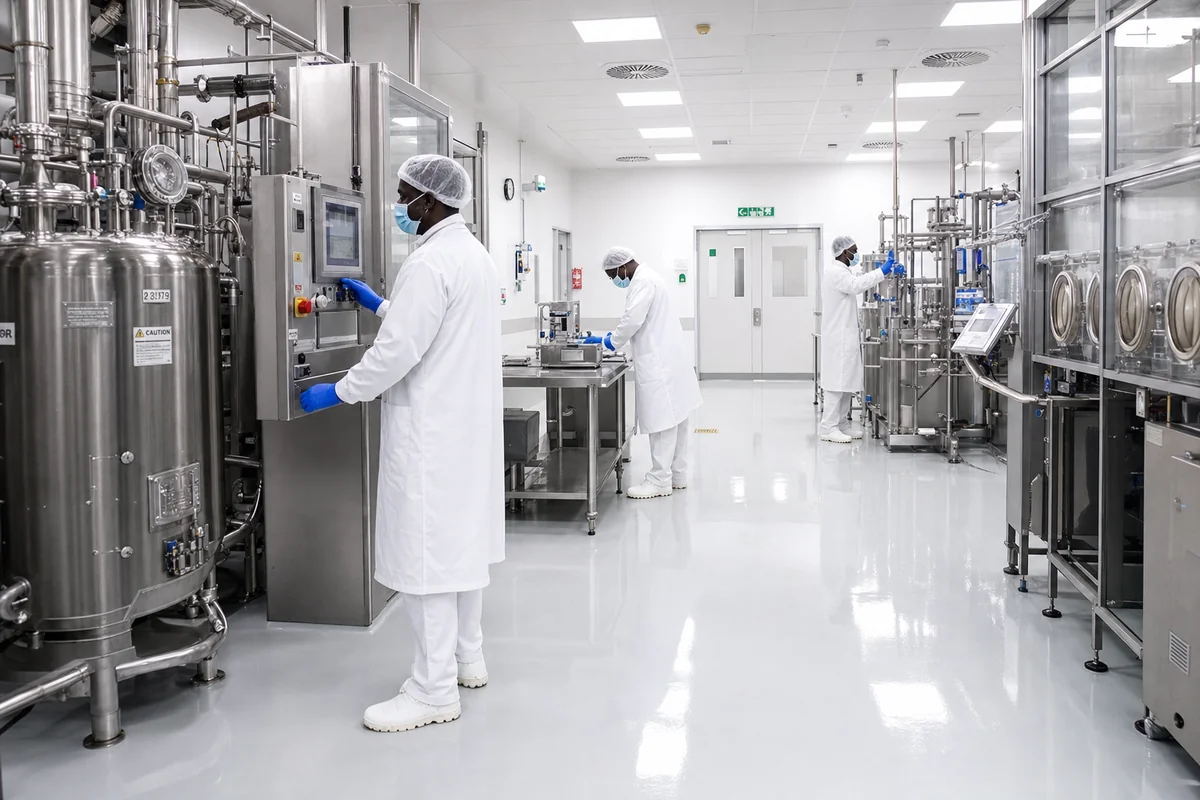
A chemical-resistant coating is a high-build resin system — chemical-grade epoxy, epoxy novolac or vinyl-ester — applied over a prepared slab to form a continuous, impermeable barrier against acids, alkalis, solvents and process chemicals that would degrade unprotected concrete within months. In Ghana’s humidity its success is decided beneath the resin, by slab moisture testing and substrate preparation, and above it by matching the resin to the actual chemical exposure. Industrial Floors Ghana has installed chemical-resistant floors across Tema and Accra since 1975.
Why Chemical Floors Fail Early in Ghana’s Conditions
A chemical-resistant floor fails one of two ways. It lifts from below, or it is dissolved from above. The first is the slab: in Ghana’s persistent 81–83% relative humidity, moisture vapour rising through the concrete builds osmotic and hydrostatic pressure under the film and lifts it — and once an edge lifts, aggressive liquid runs underneath and attacks the bare slab. The second is the wrong resin: a standard industrial epoxy chosen without auditing the actual reagents will craze, soften and break down under acid, solvent or thermal attack it was never specified for.
We engineer against both. Before specifying, we audit the chemical exposure — which reagents, at what concentration, for how long — and reference resistance behaviour to ASTM C267. Before a drop of resin is mixed we test in-situ relative humidity to ASTM F2170 and moisture-vapour emission to ASTM F1869, and prime to the reading.
Chemical-Resistant Systems We Install in Tema & Accra
Chemical-Grade Epoxy
A high-build epoxy specified for general acid, alkali and detergent exposure in processing and wash-down areas — the baseline chemical-resistant system where exposure is moderate and continuous.
Epoxy Novolac
A denser, more cross-linked resin for strong acids, solvents and elevated process temperatures, where standard epoxy is out of its depth — the step up for harsher chemical and thermal duty.
Vinyl-Ester Systems
The most chemically aggressive duty — concentrated acids, oxidisers and solvents — and the usual choice for bunds and secondary containment around the harshest process chemicals, where failure is not an option.
Bund & Secondary-Containment Linings
Containment kerbs, bund walls, drain surrounds and plinths detailed in with reinforced coves so the containment zone is one continuous, impermeable surface that holds a spill and protects the slab beneath.

Standards & Moisture Doctrine
| Standard / control | What it governs | Why it decides the floor |
|---|---|---|
| ASTM C267 | Chemical resistance of resin floors (acid, alkali, solvent immersion) | The reference for how the specified resin behaves against the audited reagents |
| ASTM F2170 | In-situ relative humidity (probes at 40% slab depth) | The dominant pre-install moisture test; the system and primer are chosen to this reading |
| ASTM F1869 | Calcium-chloride moisture-vapour emission rate | Surface vapour load; flags slabs needing a vapour-suppression primer |
| ICRI CSP | Concrete surface profile after preparation | The mechanical key a high-build chemical system bonds to — concrete uses ICRI CSP, not the steel-only ISO 8501 |
| ASTM D3359 | Coating adhesion (cross-cut tape) | Verifies the bond at handover |
| EN 16165 (Annex B) | Ramp R-rating for anti-slip | Sets the slip class where chemical floors are also wet underfoot |
How We Install a Chemical-Resistant Floor
- Chemical exposure audit & slab moisture testing — reagent inventory + ASTM F2170 in-situ RH + ASTM F1869 MVER before anything else.
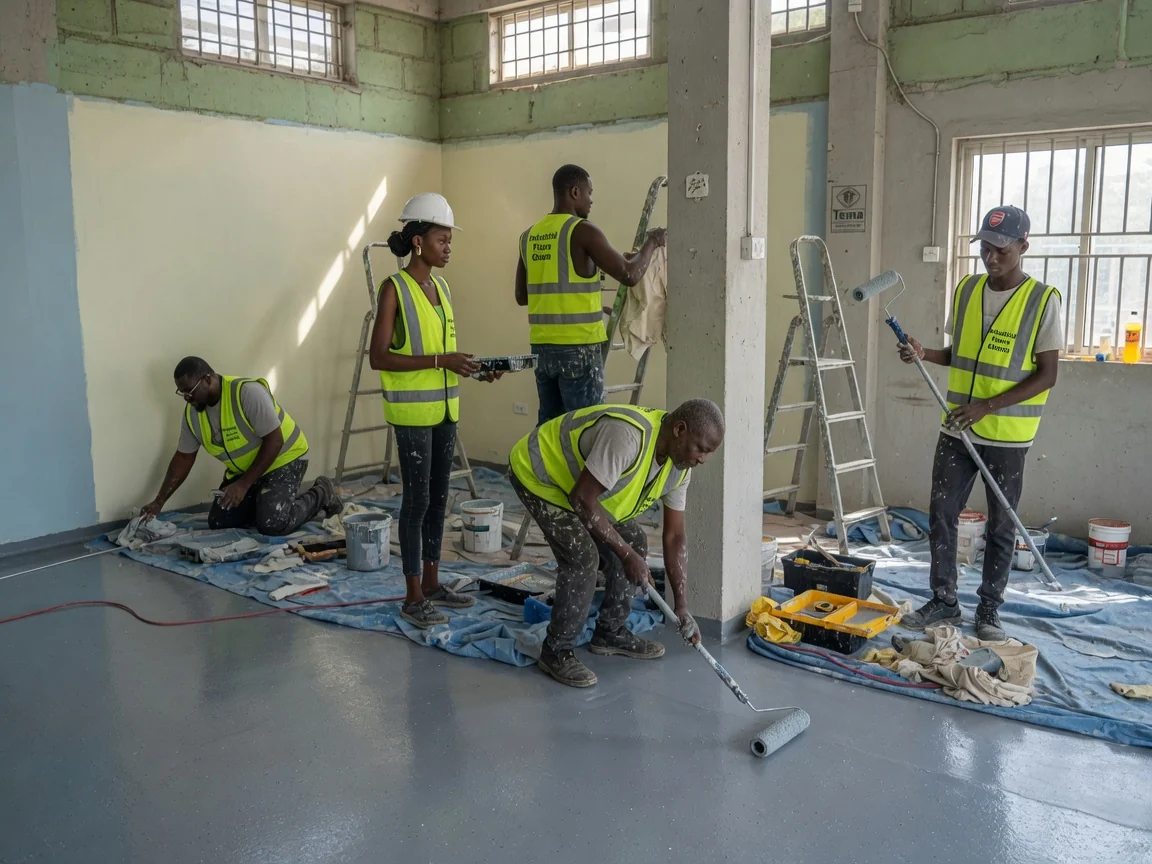
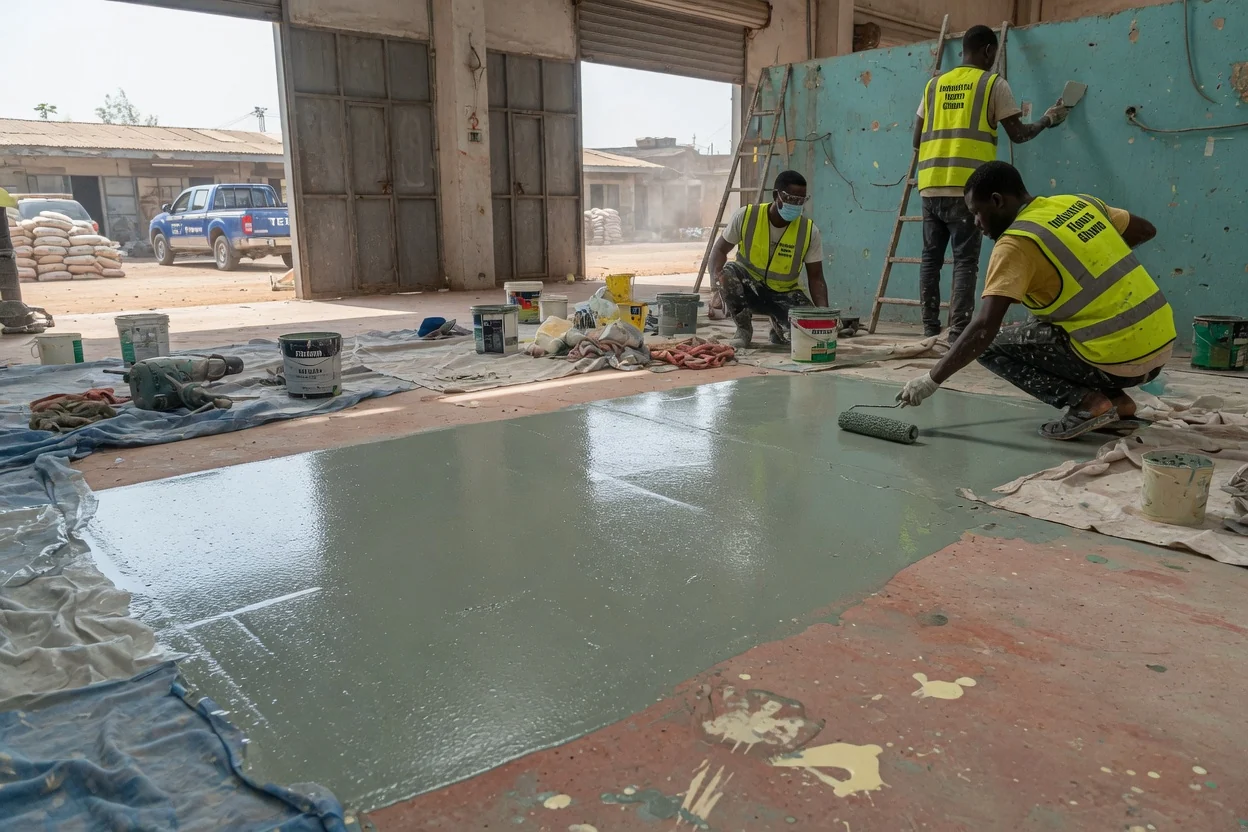
- Surface preparation — shot-blasting / diamond grinding to the heavier ICRI CSP a chemical system needs; residues removed, cracks repaired.
- System selection & priming — chemical-grade epoxy, novolac or vinyl-ester matched to the audited exposure (ASTM C267 reference); moisture-tolerant primer to the reading.
- Build, coving & bund detailing — chemical-resistant body and topcoat to film build, with reinforced coves, drain surrounds and secondary-containment surfaces.
- Verification & handover — dry-film thickness, holiday detection, adhesion (ASTM D3359), and a signed QC dossier.
Comparing Chemical-Resistant Systems for Ghana’s Climate
| System | Best for | Chemical duty | Lifespan |
|---|---|---|---|
| Chemical-grade epoxy | Detergents, mild acids/alkalis, wash-down | Moderate, continuous | 10–15+ yrs |
| Epoxy novolac | Strong acids, solvents, higher process temps | High | 12–20 yrs |
| Vinyl-ester | Concentrated acids, oxidisers, bund linings | Most aggressive | 15–20 yrs |
| Standard industrial epoxy | Mechanical wear, not chemical attack | Low chemically | Short in chemical duty |
What Affects the Cost
- The resin system specified (chemical-grade epoxy, novolac or vinyl-ester) and its film build
- The audited chemical exposure — which reagents, at what concentration and temperature
- Coving, drain surrounds, bund walls and secondary-containment detailing
- Slab condition and any moisture remediation or crack repair required
- Area (m²), access, and whether the facility stays operational during works
Every quote follows a chemical exposure audit, site survey and slab moisture test — no fixed rate is given before the exposure and slab are assessed.
Applications Across Ghana
- Pharmaceutical and chemical processing plants with reagent and solvent exposure
- Battery, plating and surface-treatment rooms across the Tema industrial area
- Bunded tank farms, dosing rooms and secondary-containment zones
- Laboratory, analytical and quality-control floors with mixed chemical exposure
- Food and beverage processing lines exposed to organic acids and cleaning chemistry
- Process and chemical facilities in Takoradi’s oil & gas corridor
Areas We Serve
Industrial Floors Ghana installs chemical-resistant floors across the Tema industrial area, Spintex, North Industrial Area, and Greater Accra, reaching Kumasi and Takoradi.
Related Services
- Industrial Epoxy Floors — seamless resin systems for production and FMCG
- Food-Grade Flooring — seamless, coved, wash-down-rated systems
- Anti-Static Flooring — ESD systems for pharma and electronics
- Heavy-Traffic Flooring — armoured systems for high-load areas
Frequently Asked Questions
What floor coating resists acids and solvents? For aggressive acids, alkalis and solvents, a chemical-grade epoxy, epoxy novolac, or — for the most concentrated acid and solvent exposure — a vinyl-ester system, specified against the facility’s actual reagent list with chemical-resistance behaviour referenced to ASTM C267. The right resin depends entirely on which chemicals, at what concentration and for how long, which is why we audit the exposure before specifying.
What is the difference between epoxy novolac and vinyl ester? Both outperform standard epoxy chemically. Epoxy novolac raises resistance to strong acids, solvents and higher temperatures; vinyl ester goes further still for concentrated acid attack and is the usual choice for bunds and secondary containment around the most aggressive process chemicals. We select between them on the audited exposure, not by default.
Do you coat bunded areas and secondary containment? Yes. Bund walls, containment kerbs, drain channels and plinths are detailed in with reinforced coves so the containment surface is continuous and impermeable — a spill is held and cannot reach the unprotected slab or escape the zone, which is the whole point of containment.
How much does a chemical-resistant floor cost? It is quoted on survey — cost varies with the resin system (chemical-grade epoxy, novolac or vinyl-ester), film build, slab condition and moisture remediation, coving and bund detailing, area, and access. We never give a fixed rate before auditing the chemical exposure and testing the slab; request a site survey.