Anti-Static (ESD) Flooring
Conductive and dissipative ESD epoxy flooring in Tema & Accra — installed and verified to ANSI/ESD S20.20 and IEC 61340, with an earthing/grounding grid and resistance testing in ohms for electronics, semiconductor, pharmaceutical and explosive-atmosphere areas, over a moisture-tested (ASTM F2170/F1869) slab. Industrial Floors Ghana, since 1975.
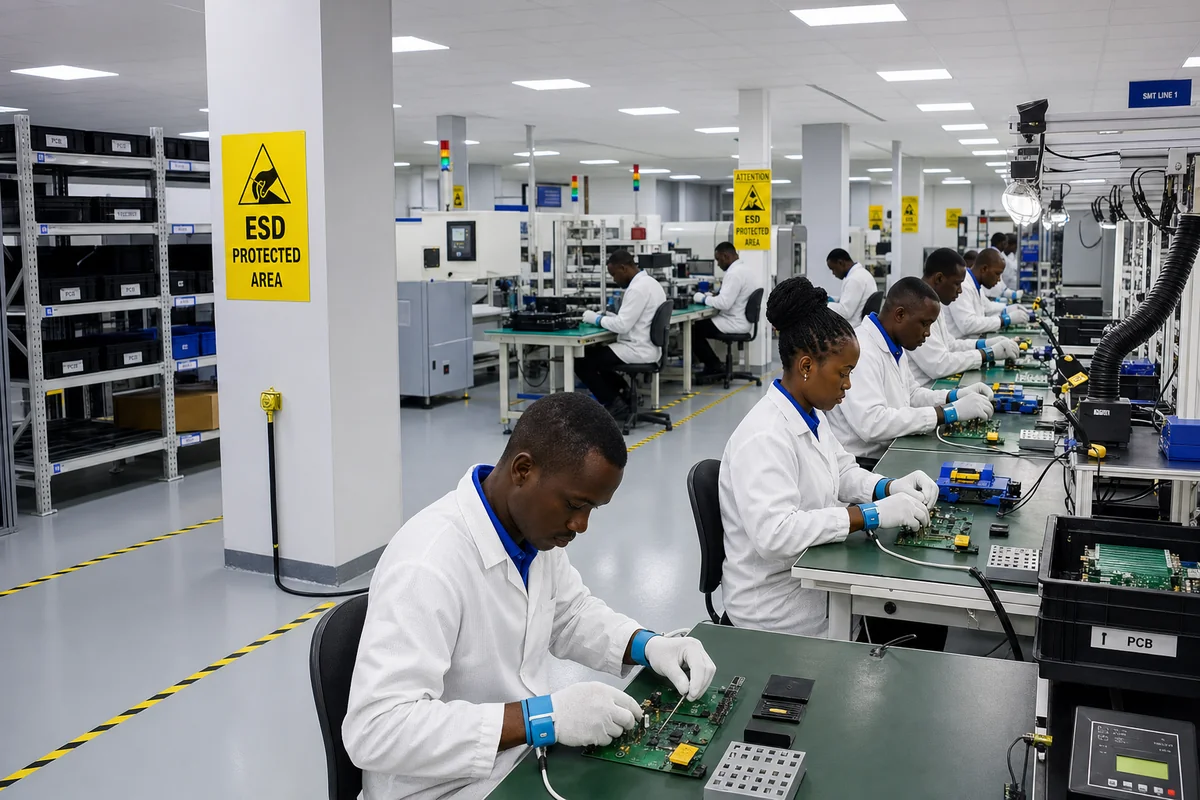
Anti-static (ESD) flooring is a conductive or dissipative epoxy system, bonded to an earthing grid, that drains electrostatic charge safely to ground at a controlled, measurable resistance. It protects electronics, semiconductors, pharmaceuticals and explosive-atmosphere areas from discharge damage and ignition. Industrial Floors Ghana has installed and verified ESD floors to ANSI/ESD S20.20 and IEC 61340 across Tema and Accra since 1975.
Why ESD Floors Fail in Ghana’s Conditions — and How We Prevent It
An ESD floor has two ways to fail, and both are decided beneath the resin. The first is electrical: a conductive coat that is not bonded to a continuous earthing grid measures fine on day one but drifts out of band, leaving charge nowhere to go. The second is the same failure that kills any resin floor in this climate — slab moisture. In Ghana’s persistent 81–83% relative humidity, vapour rising through an untested slab builds osmotic and hydrostatic pressure under the coating and lifts it, taking the conductive network with it.
We engineer against both. The earthing grid is laid, bonded and continuity-logged at every node before the conductive coat goes down, and the slab is tested to ASTM F2170 (in-situ RH) and ASTM F1869 (moisture-vapour emission) before any resin is mixed. Then we verify the finished floor in ohms — not by assumption.
ESD Systems We Install in Tema & Accra
Conductive ESD Epoxy
A fast-draining system measured to roughly 10⁴–10⁶ ohms, specified where charge must be removed very quickly — explosive-atmosphere areas, certain semiconductor and ATEX-class zones — and bonded throughout to the earthing grid.
Dissipative ESD Epoxy
A controlled-drain system measured to roughly 10⁶–10⁹ ohms for general electronics assembly, PCB lines, pharmaceutical dispensaries and medical-device cells, where charge must bleed away steadily rather than instantly.
Earthing / Grounding Grid
A copper grounding grid laid in a defined pattern, bonded to the building earth and continuity-tested at every node — the network that makes a conductive coat an actual ESD floor.
ESD Verification & Certification
Surface and point-to-ground resistance measured in ohms across the floor with a calibrated meter, mapped against the ANSI/ESD S20.20 / IEC 61340 band and issued as a signed resistance-compliance certificate with the grounding-continuity log.
ESD Standards We Build To
| Standard | What it governs | Why it decides the floor |
|---|---|---|
| ANSI/ESD S20.20 | ESD-control programme requirements | The programme standard the floor is specified, installed and certified against |
| IEC 61340 | Resistance limits & test methods for floors/footwear | Defines the conductive (10⁴–10⁶ Ω) and dissipative (10⁶–10⁹ Ω) bands and how they are measured |
| ICRI CSP | Concrete surface profile after preparation | The mechanical key the conductive primer bonds to — concrete uses ICRI CSP, not the steel-only ISO 8501 |
| ASTM F2170 / F1869 | In-situ slab RH / moisture-vapour emission | Trapped moisture lifts the floor and breaks the conductive network — tested before any resin |
| ASTM D3359 | Coating adhesion (cross-hatch tape) | Confirms the system is bonded before resistance is signed off |
How We Install an ESD Anti-Static Floor
- ESD specification & resistance target — fix the conductive or dissipative band to ANSI/ESD S20.20 and IEC 61340; agree grounding topology and junctions.
- Slab moisture & substrate testing — ASTM F2170 in-situ RH + ASTM F1869 MVER before anything else.
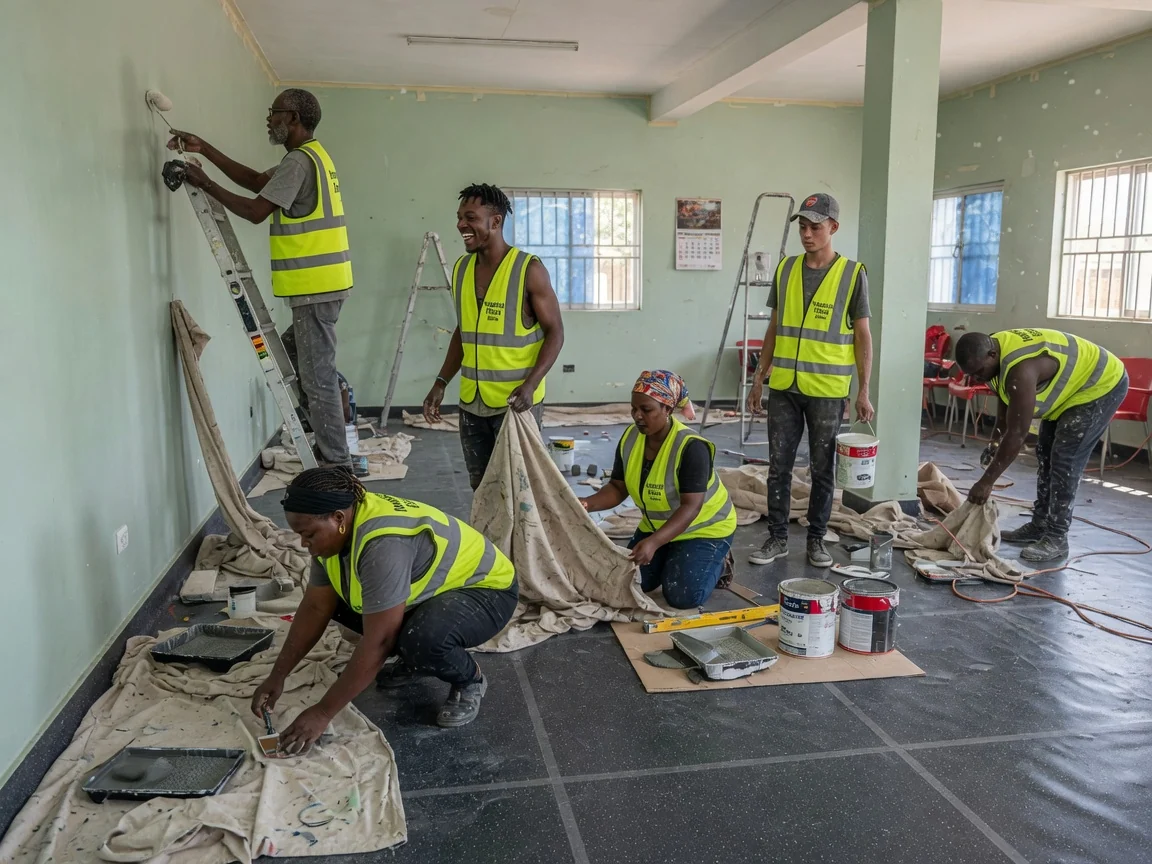
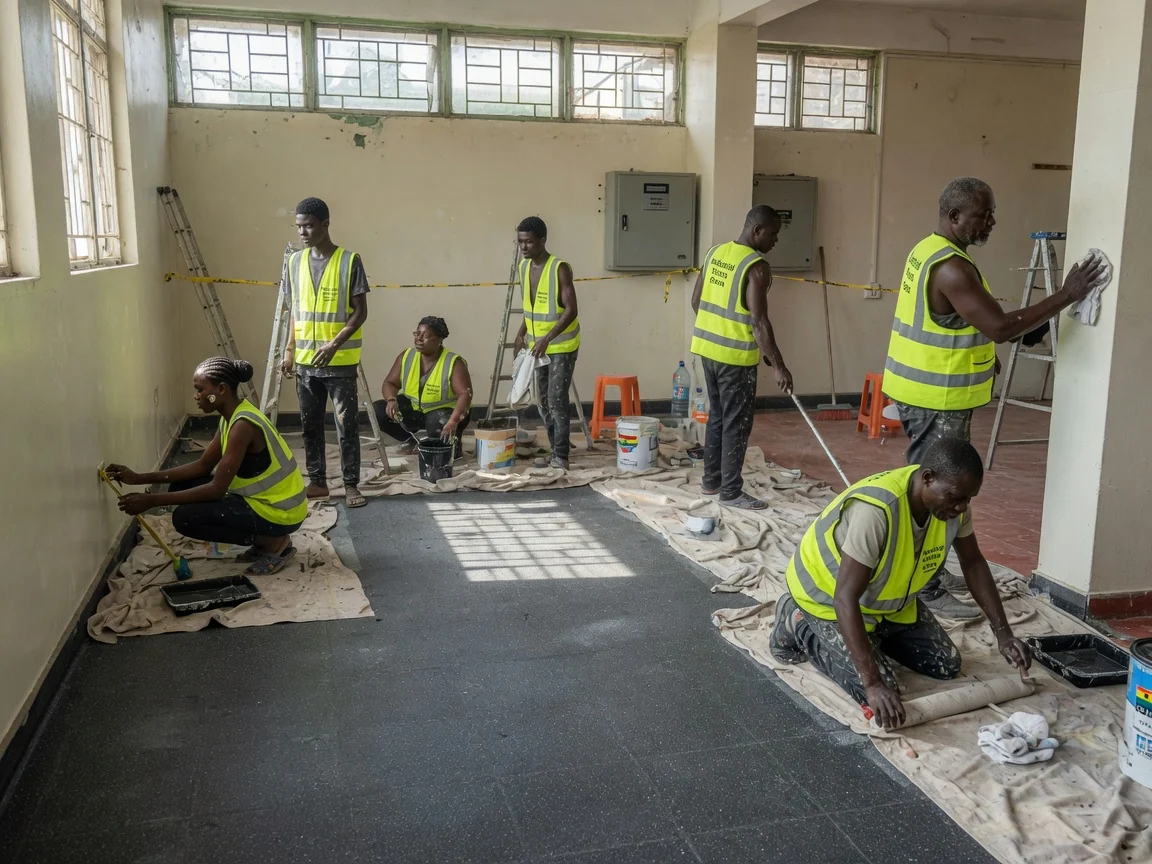
- Surface preparation — diamond grinding / shot-blasting to the specified ICRI CSP; cracks and voids filled.
- Earthing grid & conductive build — copper grounding grid bonded to building earth, continuity logged, then conductive primer, dissipative body coat and topcoat at the correct film build.
- Resistance verification & handover — surface and point-to-ground resistance measured in ohms to band, adhesion (ASTM D3359), signed resistance-compliance certificate + continuity log.
Comparing ESD Floor Grades for Ghana’s Facilities
| Grade | Resistance band | Best for | Drain speed |
|---|---|---|---|
| Conductive ESD epoxy | ~10⁴–10⁶ Ω | Explosive-atmosphere, ATEX, semiconductor | Fastest |
| Dissipative ESD epoxy | ~10⁶–10⁹ Ω | Electronics assembly, PCB, pharma, medical-device | Controlled |
| Standard industrial epoxy | Not ESD-rated | General production where ESD is not a hazard | None |
What Affects the Cost
- The resistance grade specified (conductive vs dissipative) and the film build
- Extent of the copper grounding grid and number of earth bonds required
- Slab condition and any moisture remediation or crack/void repair needed
- Area (m²), access, and whether the facility stays operational during works
- Resistance-verification scope and the certification documentation specified
Every quote follows a site survey, a slab moisture test, and confirmation of the resistance target — no fixed rate is given before the slab is tested.
Applications Across Ghana
- Electronics and PCB assembly lines across the Tema industrial area and Spintex
- Semiconductor and ATEX / explosive-atmosphere areas requiring fast charge drain
- Pharmaceutical dispensaries, compounding and medical-device manufacturing cells
- Data-centre and high-density server infrastructure spaces in Greater Accra
- Oil & gas and process facilities in Takoradi
Areas We Serve
Industrial Floors Ghana installs ESD anti-static flooring across the Tema industrial area, Spintex, North Industrial Area, and Greater Accra, with coverage out to Kumasi and Takoradi.
Related Services
- Industrial Epoxy Floors — the resin systems ESD floors are built on
- Chemical-Resistant Coatings — for processing and bunded areas
- Food-Grade Flooring — seamless, coved, wash-down-rated systems
- Heavy-Traffic Flooring — for forklift and high-load circulation
Frequently Asked Questions
What is the difference between conductive and dissipative ESD flooring? Both route static charge to earth, but at different rates. Conductive ESD epoxy measures roughly 10⁴–10⁶ ohms for areas where charge must drain very fast — explosive-atmosphere and certain semiconductor zones. Dissipative ESD epoxy measures roughly 10⁶–10⁹ ohms for general electronics assembly and pharmaceutical areas. We set the band to your ANSI/ESD S20.20 / IEC 61340 requirement and verify it in ohms.
Which standards govern ESD flooring? ANSI/ESD S20.20 is the ESD-control programme standard, and IEC 61340 defines the resistance limits and test methods. We install to those, bond to an earthing grid, and issue a resistance-compliance certificate — concrete prep follows ICRI CSP and the slab is moisture-tested to ASTM F2170/F1869 first.
Does an ESD floor need to be earthed/grounded? Yes. The conductive layer must be bonded to the building earth. We lay a copper grounding grid, bond it, and log continuity at every node before the conductive coat goes down — an unearthed conductive floor is not an ESD floor.
How much does an anti-static floor cost? It is quoted on survey — cost varies with the resistance grade, grounding-grid extent, slab condition and moisture remediation, area, and access. We never give a fixed rate before testing the slab and confirming the resistance target; request a site survey.